
Bench Warrants in Lee County
In Lee County, bench warrant is everyday shorthand for court-directed arrest process after a missed date, an unmet condition, or another failure to comply. Lower-court records may say FTA instead. Some entries read capias or capias pro fine. A district or county matter follows a different court path than a fine-only JP citation. First find the court and the case number. Then ask that court whether a warrant exists and what response will address it in Lee County.
Which Lee County Courts Can Issue a Bench Warrant?
Bench and capias issues can start in several corners of the Lee County court map. District criminal files run through the 21st or 335th Judicial District Court and the District Clerk. County Court has its own clerk route. JP2, JP3, and JP4 handle local traffic and fine-only cases. Giddings and Lexington Municipal Courts take city citations and ordinance matters. A city citation does not name the issuing court. Ask the Lee County office that holds the file.
| Court | Local case context | Records route |
|---|---|---|
| 21st / 335th District | District criminal matters | District Clerk, Giddings |
| JP2 / JP3 / JP4 | Traffic, Class C, fine and FTA matters | Precinct court named on citation |
| Giddings / Lexington Municipal | City traffic and ordinance cases | That municipal court |
How a Lee County Bench Warrant Is Issued
A missed district, county, JP, or municipal setting can trigger further process. The response depends on the case. It also depends on each court's notice rules. Failing to answer a citation counts as a trigger. So do unpaid final fines or costs, a broken release or payment condition, or a court-ordered option left undone. No Lee County page sets one grace period for every court. Read the notice you got. Then ask the clerk what happened in that file. Lee County Justice Court instructions require written contact through the court's channels and bar ex parte contact with the judge; staff cannot give legal advice, so keep questions to status, procedure, and forms.
Giddings Court Calls Do Not Count as a Lee County Appearance
Giddings Municipal Court gives a blunt warning. A phone call does not count as an appearance and will not stop a warrant. The charged person must respond in person, by mail, or by email within the stated citation period. Lexington has its own written response rule. JP3 keeps a separate citation process as well. A Lee County resident should not assume a phone message to police or a payment portal meets a court deadline.
For a Giddings citation, use the court’s stated response channel and deadline. Ask the clerk to confirm receipt and the current case status.
Bench Warrant vs Arrest Warrant in Lee County
A Lee County arrest warrant is a magistrate's written order on a stated offense and probable-cause basis. A bench or FTA process is different. It grows out of court compliance, such as a missed setting. A capias pro fine follows a fine or cost judgment plus nonpayment or noncompliance. The record's label and issuing court decide the path.
- FTA
- Failure to appear or respond as the court required.
- Capias
- Court process directing an officer to bring a person before the court.
- Capias pro fine
- Process linked to an unpaid fine or judgment.
- Recall or quash
- A court action withdrawing or setting aside process.
FTA and Capias Terms in Lee County Records
The Lee County Sheriff's Most Wanted page uses public labels like Current or Arrested, but it is not a full court status dictionary. A district clerk, JP, or municipal clerk may write FTA, capias, or capias pro fine in a record. Ask what the entry means. Ask whether an appearance, payment, motion, or another step is needed. A public-list filter cannot answer that. Only the court's file can.
How to Resolve a Lee County Bench Warrant
Start with the missed date and the court. Ask what remedy fits the case. A fine-only JP matter in Lee County may open a payment plan, community-service credit, indigency options, jail credit, or a reset. Municipal courts may want a written form. District or county process can call for the clerk or court coordinator, counsel, a motion to recall, bond, or an arranged surrender. Never send a felony or district warrant through a generic citation portal. That shortcut does not exist. After you appear or pay, request the court's recall or closure confirmation in writing. A separate DPS/OmniBase report may still need the reporting court to update it.
Resolving a Lee County JP2 Bench or FTA Matter
JP2 lists payment plans, community-service credit, indigency waiver where applicable, and jail credit where applicable. Accounts can move to McCreary, Veselka, Bragg & Allen after 60 days. A 30% collection fee applies. An Omni hold adds a $10 DPS administrative fee. Cards are not free. A 4% credit or debit convenience fee applies at the JP2 window. Those are JP2 payment facts, not a Lee County bond or warrant schedule. A wrong Certified Payments Bureau Code cannot be transferred and can delay processing, JP2 warns. Lee County callers can dial the verified JP2 number, 979-542-3030, to confirm the current code before paying.
Which Lee County Court Issued It?
Match the paperwork to the court that issued it. The cause or citation number, plus the office named on the papers, tells you where the Lee County case lives. District criminal docket questions go to the District Clerk at 979-542-2947. The justice courts sit at JP2, 200 South Main, Room 114, in Giddings; JP3 at 8871 North Highway 77 in Lexington; and JP4 in Dime Box. Municipal citations run through Giddings Municipal Court or Lexington Municipal Court. Can't tell which court holds the warrant? Call LCSO at 979-542-2800, which routes law-enforcement questions; the sheriff's office runs no separate warrant-only line.
The Third Court of Appeals Is Not a Lee County Warrant Desk
Lee County sits in the Austin-based Third Court of Appeals district. That court, though, hears appeals. It does not issue first-instance arrest warrants or bench warrants, so don't confuse a higher-court directory listing with the local clerk who actually holds your case. The practical route in Lee County runs through the 21st and 335th District Courts, County Court, the Justice Courts, and the municipal courts, depending on case type. For warrant status or a recall, the issuing court is the right desk. The Third Court of Appeals site lays out the court's appellate role and its service area.
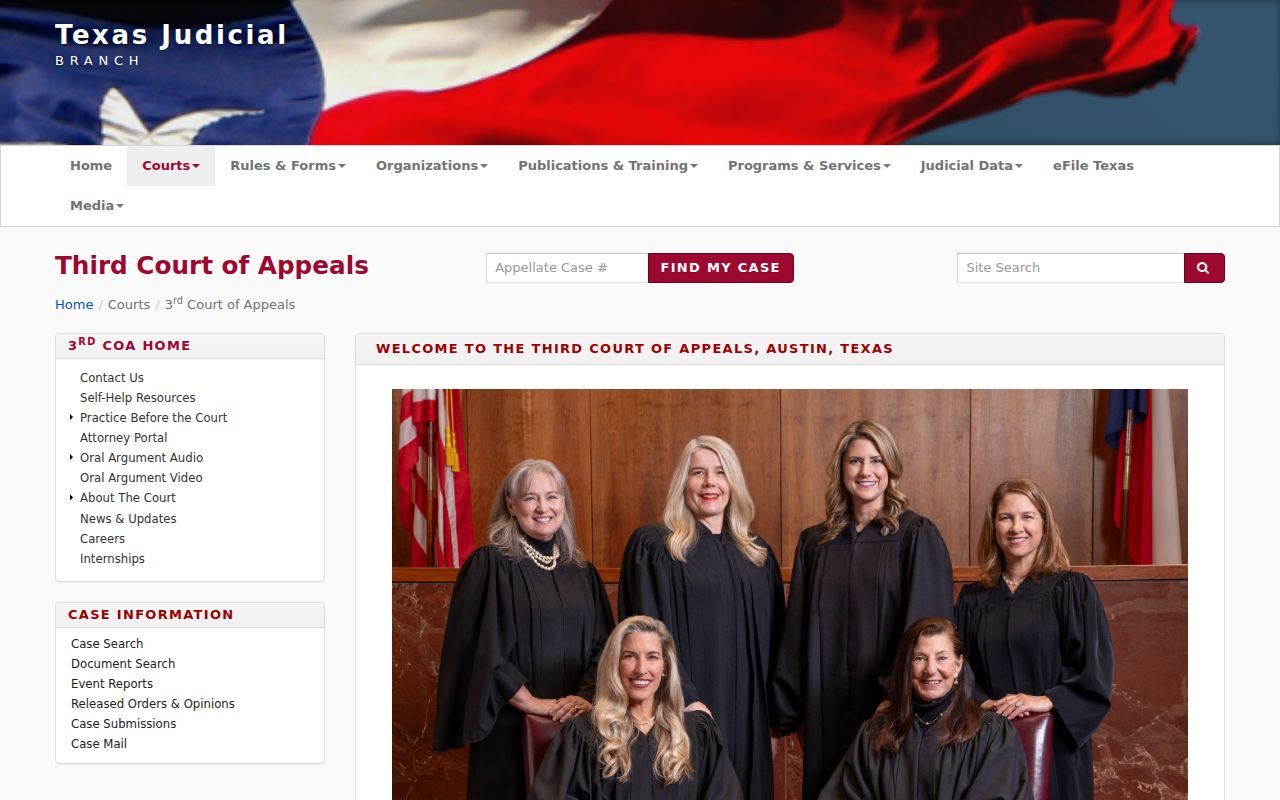
Take warrant status and recall questions to the local issuing court in Lee County, not the appellate court's information page.