
How to Search for a Warrant in Lee County
Look at the citation, notice, or docket in hand and read the court name and case number first. That single line tells you which door to knock on. District criminal cases in Lee County run through the District Clerk and the 21st or 335th Judicial District Court. County Court keeps its own record route. A traffic or fine-only matter may sit with JP2, JP3, JP4, Giddings Municipal Court, or Lexington Municipal Court. The Sheriff's Most Wanted search can show whether a name appears on its public list. A clear result, though, cannot rule out a file in a different court, so confirm with the court named on the paper.
- Check the Sheriff’s Most Wanted page by first or last name.
- Use Current and Arrested as page filters, not as a full court status history.
- Contact the court printed on the paper to ask about its own record.
- Call LCSO at 979-542-2800 if you need help identifying the law-enforcement office.
- For a specific Sheriff-generated record, use its public-information request route.
Start With LCSO’s Name Search, Then Call the Issuing Court
The Lee County Sheriff's Office Most Wanted search page gives you a Search By Name field, a Search button, Show All, sort controls, and Name, Current, and Arrested filters. It is quick to use. It is also thin on detail. A public result in Lee County shows no warrant number, offense, bond amount, issuing court, or full status code, and the Sheriff's page promises no refresh schedule or complete coverage. So treat it as a limited window onto a curated list, not a countywide warrant-status portal. After any search there, call the court that issued the process and ask it to confirm what stands today. Open the official LCSO Most Wanted search to use the current controls yourself, and let the issuing court have the final word on any Lee County warrant.
Lee County Warrant Search Fields
Each Lee County channel asks for different details, so give only what the office requests. The Sheriff's Most Wanted page takes a name. The JP3 nCourt route is built for citation payment and runs on a Citation Number. JP2 Certified Payments wants a Bureau Code, the docket or case number, and the amount due; JP2 gives out the code by phone, because a wrong code cannot be transferred. A clerk handling a record request may instead ask for a cause number or a date range. Matching the fields to the office saves everyone time.
| Channel | Visible field or control | Purpose and limit |
|---|---|---|
| LCSO Most Wanted | First or last name; Current / Arrested | Searches a curated listing, not a complete register |
| JP3 nCourt | Citation Number | Payment route, not warrant confirmation |
| JP2 Certified Payments | Bureau Code, docket/case number, amount due | Fine payment when eligible; verify the current code |
| LGS records index | Office and record type; filters vary | Index and images, not a warrant-status lookup |
The Lee County Warrant Search Filter Is Not a Court Status Code
"Current" and "Arrested" are just labels on the Sheriff's search interface. The page publishes no official legal-status dictionary and no warrant number you could cross-check against a court file. A Lee County court may hold a case record that never appears on that page at all. A court record can also change after any public result is displayed. So never read a filter as proof of recall, service, or closure. Ask the issuing clerk what the court file says right now.
A name search is a starting point. Only the issuing court or the responsible law-enforcement office can confirm a specific Lee County warrant’s present status.
What a Lee County Warrant Search Returns
What you get back from a Lee County warrant search depends on which office you asked. The Sheriff's page can show whether a name matches one of its curated Most Wanted listings. The county-linked LGS portal offers index information and image purchasing, though its fields shift with the office you select and its criminal dropdown stays hidden from public view. A JP or municipal court can answer for a local citation, fine, appearance, or capias. A District Clerk docket can help you spot a district case. Keep one limit in mind: an index entry alone does not confirm that a warrant is still outstanding.
| Public list | Possible LCSO listing in its selected public subset. |
|---|---|
| Court index | Case or docket information, with some images restricted or paid. |
| Issuing court | Current court-specific appearance, payment, and warrant status. |
| What is missing | A single search spanning all county, city, state, and federal systems. |
A Lee County Warrant Search Does Not Replace the Online Court Index
Lee County also links to a vendor-hosted index and image service that a warrant search cannot replace. A guest can browse the index, and registration only takes a valid email. Free searching is available, you can buy up to five images before needing a subscription, and every purchase carries a mandatory $0.30 transaction fee. Results come with More Information or Images controls, page arrows, Add to Cart, and Proceed To Checkout. A purchased image is useful for case research. It still cannot tell you whether a warrant is active today. The Texas Judicial Branch directory lays out each Lee County court and its location, so you can route a court-record question to the right bench. Check the official court directory before you call.
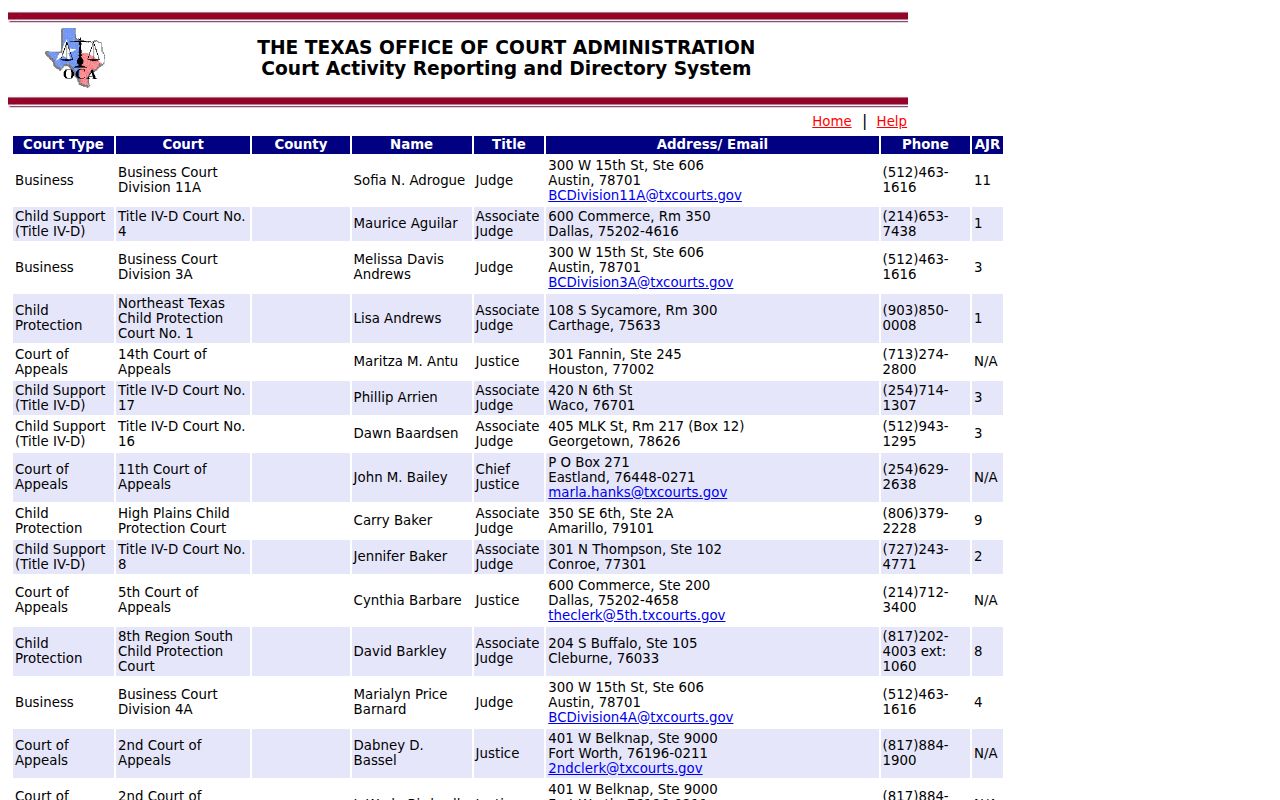
The directory names the courts; the listed local clerk gives the current case answer in Lee County.
Where Lee County Warrants Are Checked
Match your warrant question to the office that holds the file. The District Clerk, at 289 South Main in Giddings, handles district criminal dockets. County Court records go through the County Clerk or the court itself. JP2 sits in Giddings, JP3 in Lexington, and JP4 in Dime Box. Giddings and Lexington municipal citations stay with their own city courts. For an unclear law-enforcement question, LCSO can point you the right way at 979-542-2800, though the Sheriff runs no dedicated warrant-only phone line in Lee County.
What to Include in a Lee County Sheriff Records Request
The Lee County Sheriff's public-information form covers records the Sheriff itself generated, not files held by a JP court, a municipal court, the District Clerk, the County Clerk, or DPS. The Sheriff's page warns against broad, open-ended requests. So be specific: name the record type, the date range, the agency if you know it, and any report, case, or warrant reference on hand. Send requests through the records route LCSO lists. Read the current PDF before submitting, since field labels, fees, and identification rules can change. Texas Government Code Chapter 552 governs the whole public-information framework and its exceptions. Remember, a records request never substitutes for asking the court directly about current warrant status in Lee County.
Access and Restricted Lee County Warrants
Not every warrant record is public. Texas draws lines by stage and by record type. Code of Criminal Procedure Article 15.26 opens an arrest warrant and its supporting affidavit to public inspection and copying once the warrant is executed, subject to confidentiality and redaction rules. Juvenile arrest warrants sit behind Family Code Section 58.010. Search warrants follow their own Chapter 18 rules. So a recent, sealed, or juvenile item may never surface in a Lee County search. A blank result settles nothing about what the issuing court holds.
Use the right rule:
Texas Government Code Chapter 552 sets general public-information access and exceptions.
Code of Criminal Procedure Article 15.26 addresses post-execution arrest-warrant access.
Family Code Section 58.010 restricts public access to juvenile arrest-warrant records.
A Recent or Sealed Lee County Warrant Record May Be Missing
A portal view can lag the court file. It may leave out a lower-court record, sealed papers, or confidential details that only the court can see. The LGS index is not a live warrant database. The Lee County Sheriff's Most Wanted search is curated, not complete, and DPS/OmniBase is a license-renewal hold program rather than a warrant search. Spotting an OmniBase hold? The reporting court is the office to ask about the citation and any warrant tied to it. When the case court is unknown, work from the citation or call LCSO for routing. A blank result is still not clearance.