
Traffic Warrants in Lee County
Every Lee County ticket belongs to one court. The citation names that court. The Lee County Sheriff's public-information page sends traffic questions to the courtesy letter and the proper Justice of the Peace, while Giddings and Lexington each run their own municipal courts for city citations. Miss a date or leave a fine unpaid and the result may be a failure-to-appear warrant or a capias pro fine. One payment route does not fit every Lee County case. Start with the court on the ticket.
Which Lee County Court Handles the Citation?
Lee County has three Justice Court precincts. It also has two city municipal courts. The city where you received the ticket does not choose the payment portal. Read the citation heading instead. If the paper is unclear, contact the court it names. A JP citation does not belong at a city court, and a Giddings or Lexington ticket does not belong at a JP just because it involves traffic.
| Court or channel | What it handles | Useful field or route |
|---|---|---|
| JP2 | Fine-only and traffic cases | Docket/case number, amount due, Bureau Code |
| JP3 | JP citations | nCourt accepts Citation Number |
| JP4 | Precinct 4 cases | Contact issuing court at Dime Box |
| Giddings Municipal | City citation and appearance | Written, mail, email, or in-person response |
| Lexington Municipal | City citation and capias process | Written Reply/Request and court payment options |
How to Check for a Lee County Traffic Warrant
Call the court named on your Lee County citation, or write to it, and ask whether the case carries an FTA, capias, or capias pro fine entry. The Sheriff's Most Wanted search is only a curated subset, not a traffic-warrant database. JP3's nCourt portal takes payments. It does not confirm warrants. For a DPS or OmniBase hold, ask the reporting court which citation it reported. DPS specialists have no warrant information.
- Keep the ticket, citation number, or court paper in front of you.
- Confirm the court name, current amount, and any FTA or capias status.
- Ask whether a written reply, hearing, payment plan, or other option applies.
- Use a payment service only after the court confirms it fits the case status.
- Request confirmation that the court recalled or closed the process.
JP2’s Lee County Payment and Clearing Details
Lee County JP2 lays out several ways to resolve a fine. A payment plan is one option. Community service earns credit at a minimum of $100 for eight hours. Indigency waivers and jail credit apply where the court allows. The fine is due immediately after assessment, though a written extension request may be possible. After sixty days, JP2 can move the account to McCreary, Veselka, Bragg & Allen. That firm adds a 30% collection fee. An Omni hold adds a $10 DPS administrative fee. At the Lee County JP2 window, credit or debit costs a 4% convenience fee. Cashier's checks and money orders carry none. Certified Payments wants a Bureau Code, the docket or case number, and the amount due. A wrong Bureau Code cannot be transferred and delays processing. Call 979-542-3030 to confirm the current code first.
What a Lee County Traffic Warrant Shows
A Lee County traffic file can tie the citation to its issuing court, the appearance date, the fine judgment, FTA or capias status, payment terms, and any later recall or service entry. No countywide warrant-number pattern exists. Nor is there a universal balance lookup. The court's payment portal may show less than the clerk does. Don't calculate totals from a listed fine maximum or a fee line. Ask the court for the current amount and status.
| Citation reference | Number on the ticket; JP3 nCourt specifically accepts a Citation Number. |
|---|---|
| Court | JP precinct or municipal court that issued the citation. |
| Money due | Ask about fine, court costs, collection, time-payment, and warrant fees. |
| Warrant action | Confirm whether a capias has been recalled after the court accepts a remedy. |
Giddings Citations Can Reach a Lee County Traffic Warrant
Giddings Municipal Court wants a charged person to appear within twelve days of the citation. Appearance can be in person, by mail, or by email. A phone call does not count. It will not stop a warrant either. The court's forms cover an extension or payment plan, a not-guilty plea, defensive driving, guilty or no contest, and paying without an amount stated. Ask the clerk which response fits your Lee County case. Find the court at 118 E. Richmond. The phone is 979-540-2707. Email works too. Write to giddingsmuncourt@giddings.net. Fine and procedure questions go to the court, not the police department.
Paying or Lifting a Lee County Traffic Warrant
Before you send money, tell the Lee County court the citation may sit in FTA or capias status. Ask what action will actually recall the warrant. A payment plan, an extension, community service, indigency review, or an appearance may all be options. Keep the written instructions, the receipt, and confirmation of the recall. An online payment can settle a balance. That doesn't update every Lee County record system at once.
JP2 publishes specific payment routes, but its Bureau Code must match the court. Confirm it with the clerk before using Certified Payments.
Lexington’s Lee County Traffic Warrant Reply and Capias Rules
For a Lexington citation in Lee County, the Municipal Court requires written contact within ten days. A Reply/Request can go to P.O. Box 60, to court@cityoflexingtontx.com, or to the counter at 604 Wheatley. Miss the hearing and the court can enter a conviction, set a fine, and issue a capias pro fine. Options include defensive driving, a monthly plan, a one-time 30-day extension, indigent or community-service alternatives, payment in full, and a not-guilty route. Eligibility and exact totals come from the court. The Lee County court's calendar runs weekdays 8 to 5. It closes from noon to 1. Holidays, training, and emergencies can change access. The municipal-court warrant guide explains how a city court differs from a JP. The official Lexington court calendar posts the current contact and appearance instructions.
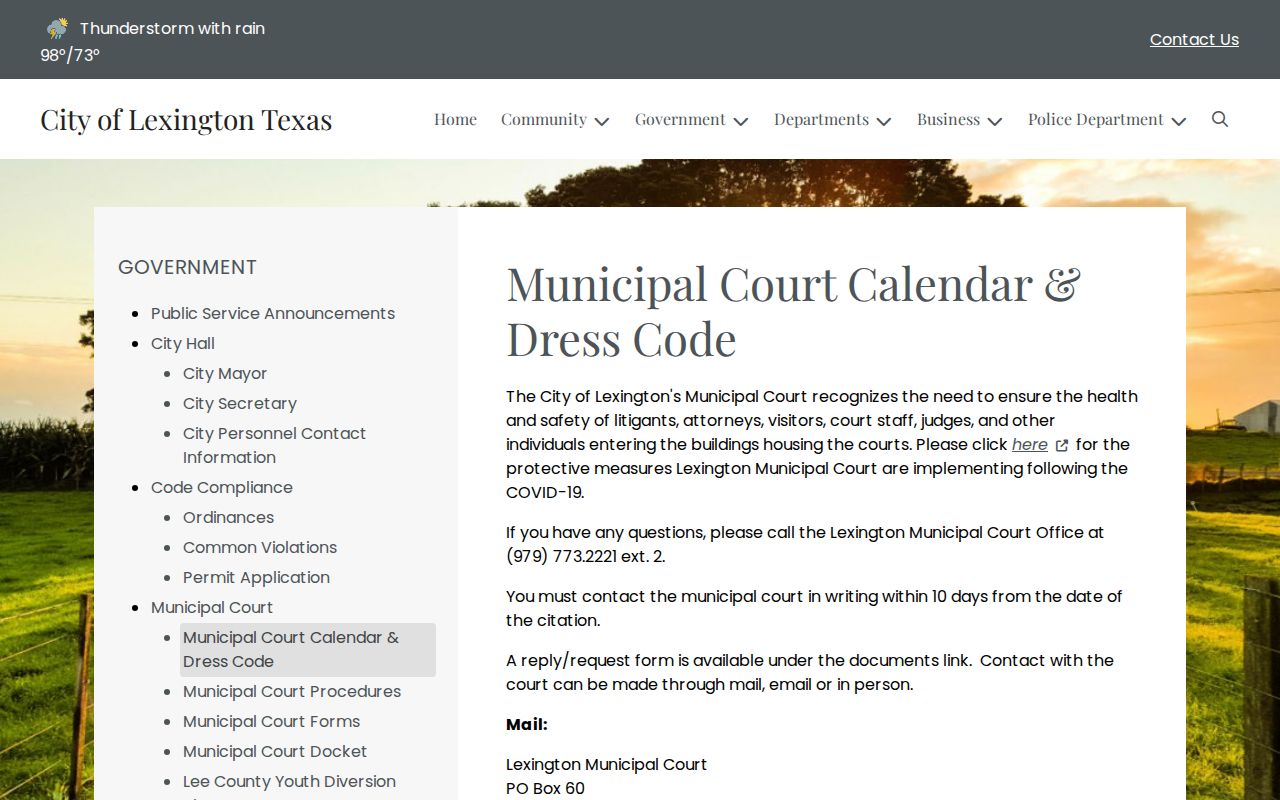
The official calendar sets court contact expectations; it is not a public warrant search.
OmniBase Holds and Lee County Traffic Warrants Are Separate
DPS and OmniBase run a program that flags missed court dates and unpaid fines for participating courts, and a Lee County case can show up in it. An FTA or FTP report can block driver-license renewal. What it cannot do is act as a Lee County warrant lookup. The hold may point you to the reporting court. That helps. It still is not proof of a warrant. Call that court about the citation, a payment plan, or your appearance options, and ask whether it has corrected its report. DPS cautions that an update may take up to seven business days after the court changes the report, and that window is a processing time, not a deadline for a warrant recall. Texas DPS explains the FTA/FTP program and sends readers back to the reporting court, and OmniBase explains the individual side of the same program with the same direction.
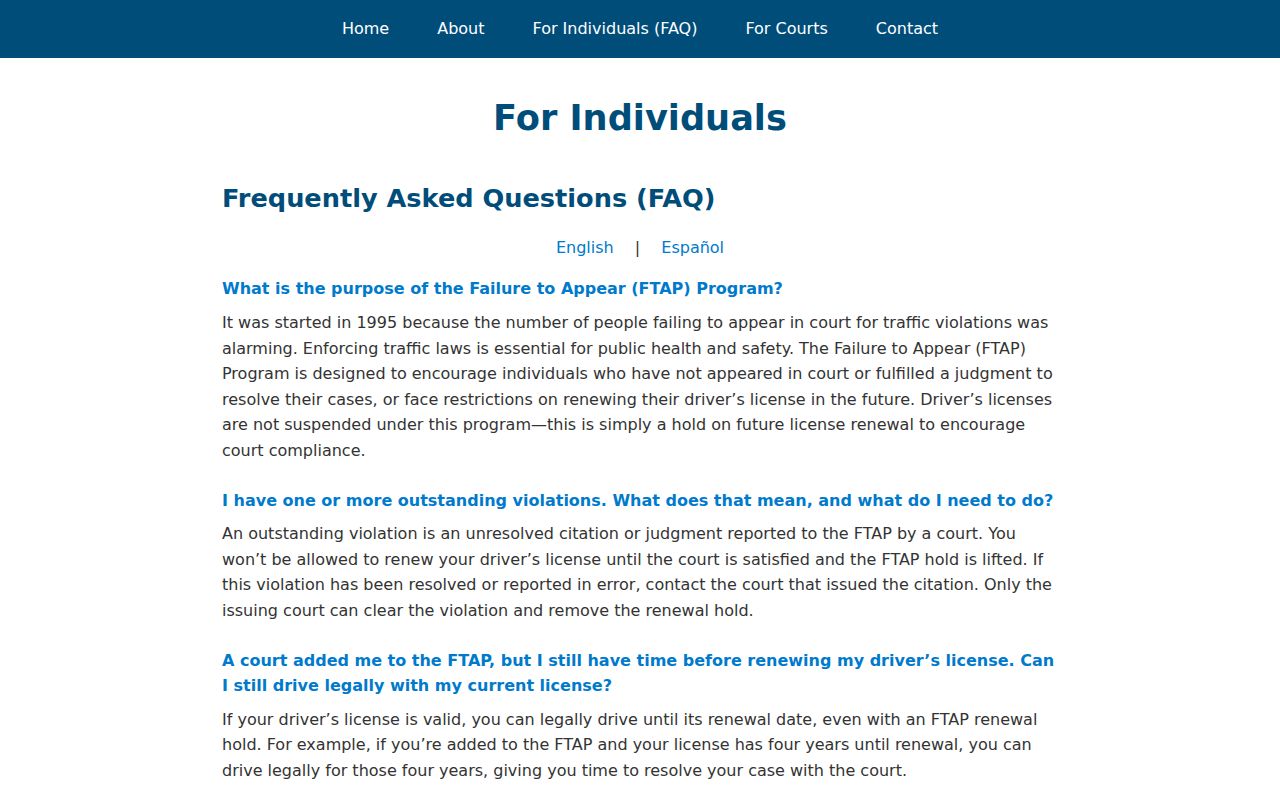
The image shows a reporting program, not a warrant database or traffic-history record.
Traffic Warrant vs FTA and License Holds in Lee County
A failure to appear in a Lee County traffic case is a court event, a status on the docket. A capias is different. It is process the court issues. A DPS or OmniBase hold is a third thing entirely, a report that can affect license renewal. All three can grow from one citation. The court decides its own case and whether to recall a capias, while updates sent to DPS come from the reporting court, so check the citation court and ask about each status separately.